How much should you be setting aside each month for your child’s university education? For most families the honest answer is a few hundred dollars, but yours depends on your child’s age and the path you have in mind. The calculator below pins down your figure. The rest of the page gives you the 2026 costs and inflation rates to enter, and what to do about the result.
12 Cost of Living in Singapore Statistics (2026)
Singapore has constantly been ranked as one of the cities with the highest cost of living in the world.
Some wonder if these rankings mean much when a $4 hawker meal still exists. The pressure shows up elsewhere. Housing, cars, education, and healthcare all cost far more here than in most developed countries.
Much of this comes down to geography. Singapore has little land and almost no natural resources, so we depend on other countries for food, energy, and water, and prices here move with the world’s.
Here are 12 statistics on the cost of living in Singapore, based on the latest official data. We update this page as new figures are released.
(Although we can’t control the cost of living, we can take charge by focusing on better ways to manage our finances.)
Note: All prices quoted are in Singapore dollars (SGD).
The Average Monthly Cost of Living in Singapore (2026)
How much do you actually need to live in Singapore each month?
Less than you might think, or far more, depending on how you live here. A local taking the MRT and eating at hawker centres, and an expat renting a condo with a car in the driveway, pay very different amounts to live in the same country.
So instead of one average figure, we tabulated both.
SmartWealth’s 2026 tabulation puts the average monthly cost of living in Singapore at $1,900 to $3,200 for a single adult on a typical local lifestyle, and $8,000 to $12,000 on an expat-style lifestyle.
Note: all figures are in Singapore dollars, and we refresh the page as new numbers come out.
The Cost (& Average) of University Tuition Fees in Singapore [2026]
Education has always been in high demand in Singapore, driven by parents eager to see their children excel in top schools, regardless of their grade level.
Securing a spot in these prestigious schools isn’t easy, often requiring excellent grades. To help their children succeed, many parents turn to private tuition and enrichment classes.
As a result, education costs have climbed significantly over the years.
University education, often the final hurdle for many students, is the most expensive of all and demands effective money management strategies to fund.
In this article, we’ll take a closer look at the cost of pursuing a university degree in Singapore and what the average expenses entail.
Note: All prices are quoted in Singapore dollars (SGD).
Richest People in Singapore: The Top 10 and How They Got Rich
If you’ve watched Crazy Rich Asians, you may have wondered whether Kevin Kwan’s characters have real-life counterparts in Singapore. They do, in a sense. Singapore is home to six family fortunes worth more than US$10 billion each.
Below, we go through Forbes’ latest top 10 one by one, then the full top 50, and what the numbers say about where Singapore’s big fortunes come from.
Note: Net worths are in US dollars, as Forbes publishes them. Where we convert to Singapore dollars, we use US$1 = S$1.27.
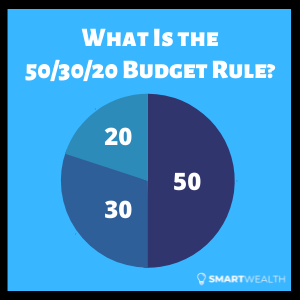
The 50/30/20 Rule in Singapore: How to Budget Your Salary
Most of us get paid once a month, but very few of us decide in advance where each dollar of that pay should go.
Without a plan, spending tends to fill whatever is in the account. Saving becomes whatever happens to be left at the end of the month, which is often not much.
The 50/30/20 rule is one of the simplest ways to change that. It does need some adjusting for Singapore, mainly because of CPF, so I’ll cover that too, along with how to set the rule up in seven steps.
Why Is Singapore So Expensive? 9 Reasons Behind the High Cost of Living [2026]
Why is Singapore so expensive? In short, land is scarce, almost everything is imported, and the government deliberately makes owning a car costly. Add a 9% GST, property prices that keep climbing, and healthcare and education costs rising faster than inflation, and you get a country that regularly ranks among the priciest in the world.
But there’s a part the global rankings miss: how expensive Singapore feels depends heavily on whether you live like a local or an expat.
In this article, we’ll break down the nine real reasons behind Singapore’s high cost of living, who actually feels them, and what you can do about it.
(While the high cost of living is beyond our control, we can and should find ways to make better use of our money.)
Inflation Rate in Singapore: Current, Average & Historical (2026)
When planning your finances, the inflation rate matters more than almost any other number.
It tells you whether your investment strategies are outpacing rising prices, and it determines how much your retirement or your children’s university education will really cost by the time you get there.
But how much has the cost of living actually increased over the years? What is the inflation rate in Singapore right now, and what has it averaged over the long run?
Let’s start with where things stand right now, then zoom out to the long-run picture.
Average Healthcare (Medical) Inflation Rate in Singapore [2026]
Recently in Singapore, there has been growing concern about rising medical costs.
In particular, discussions surrounding various types of insurance plans, including MediShield Life and its supplement, the Integrated Shield Plan, as well as fees charged by public and private doctors, are intensifying.
While many changes have been made to curb rising healthcare costs, they currently seem to be inadequate.
More changes are expected in the future, but for now, we’ll focus on the cost of healthcare and the average (and past) medical inflation rates in Singapore.
So, read on!
Average Education Inflation Rate in Singapore (2026)
Singapore has no natural resources.
But even with its limitations, it has grown to be more than just a little red dot.
Many of Singapore’s successes, such as its economic growth, come from the people living in it, and these successes will likely continue for the foreseeable future.
Education is a core component of human capital, which has played a pivotal role in the growth of Singapore.
As such, the importance of education has always been highlighted, not just from a national level, but from a parental level too. And that’s how we get the saying, “Study hard and you’ll get a good job.”
However, with a stronger demand in education, costs will inevitably rise, and that also contributes to the overall increase in the cost of living in Singapore. This creates a greater need to implement strategies for better financial management, such as effective spending and utilising savings or investment alternatives.
How much has the cost of education already risen? And what is the average education inflation rate in Singapore?
Read on to find out!