

Compare term insurance plans in Singapore, and get personalised quotes to find the best one for your needs.
What Term Life Insurance Is, and What It’s Really For
Term life insurance is a policy that pays out a lump sum if you die or are diagnosed with a terminal illness during a fixed period you choose, and, with riders added, if you suffer a total and permanent disability or a critical illness. When that period ends, the cover stops and there is no cash value.
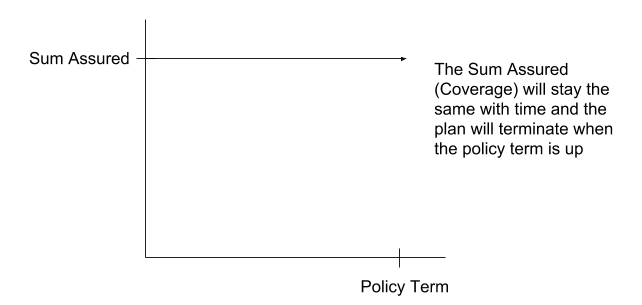
What you get for that simplicity is a large amount of cover for a small premium.
The real purpose is income protection. Your income is what pays the mortgage, raises your children, and builds your retirement. A term plan replaces a portion of it if you are no longer around, or no longer able, to earn.
That is why it fits the years when other people depend on you: while the home loan runs, and while the children are not yet standing on their own. It works best as one layer within your broader insurance planning, not as a fix on its own.
How Much Cover Do You Actually Need?
Singapore’s official Basic Financial Planning Guide, published by MoneySense with MAS and the industry bodies, recommends holding life cover of about 9 times your annual income for death and total permanent disability, and about 4 times for critical illness. The Life Insurance Association’s Protection Gap Study arrives at the same 9x and 4x figures.
That is a rule of thumb, and a fine place to start. To make it your own, work out what your dependants would actually need, then count what you already have in place, in three steps:
- Add up what your dependants would need: the outstanding mortgage, day-to-day living costs for the years they would rely on you, your children’s education, and final expenses.
- Total what is already in place: existing policies, employer cover, your CPF Dependants’ Protection Scheme, CPF savings, and other assets.
- Subtract the second from the first. What is left is your protection gap, and the least you should think about covering. A life insurance calculator does the same maths with your own figures.
Take someone aged 35 earning $72,000 a year. The benchmark works out to about $648,000 of death and TPD cover and $288,000 for critical illness. If existing policies, employer cover, and savings already come to $500,000, the shortfall left to insure is nearly $150,000, and usually wider on the critical illness side.
One caveat on that subtraction. Counting your savings and CPF towards the target assumes your family would actually spend them if the worst happened.
In reality, most people would rather leave those savings where they are and have insurance carry the full amount, which is a fair argument for covering closer to the 9x and 4x levels rather than only the gap. Neither approach is wrong. It comes down to how comfortable you are running down savings instead of leaning on cover.
You Probably Already Have Some Cover, So Why Isn’t It Enough?
Most working Singaporeans already hold some life cover and are still short. The average working adult is around $170,000 short on death cover and about $265,000 short on critical illness cover, going by the LIA’s 2022 study (figures as at end-2021).
Being underinsured is the normal state of affairs in Singapore, not the exception. Part of the reason is that the cover people count on is easy to overestimate.
CPF Dependants’ Protection Scheme (DPS). DPS pays out at most $70,000, and only until age 65. It is a safety net, not a plan.
Employer or group cover. Company insurance is a real benefit, but it usually lapses the day you leave the job. If your health has changed by then, arranging your own cover afterwards can mean higher premiums or exclusions.
An old whole life policy. A plan bought years ago often carries a modest sum assured. It is worth checking what it actually covers before assuming you are set.
None of these layers are useless. The point is that they add up to less than most people think, which is where a term plan does the heavy lifting.
What a Term Plan Covers
Every term plan covers death, and terminal illness is almost always bundled in with it. Everything beyond that is added through riders, so you can shape the plan around what you need.
The common building blocks are:
- Total and permanent disability (TPD). Pays out if you are totally and permanently disabled.
- Critical illness (CI). Pays on diagnosis of one of the 37 standardised critical illnesses, most of which are later-stage conditions.
- Early critical illness (ECI). Extends that cover to early and intermediate stages, where standard CI cover may not pay at all, so some consider a standalone early critical illness plan.
Critical illness is where the shortfall bites hardest. It strikes more often than most people expect, yet our claims research points to an average critical illness payout of around $52,000 at one insurer, which can fall well short of the years of income a serious diagnosis costs.
One thing to plan around: cover is priced on your health, and every application is subject to underwriting and full health disclosure. The longer you wait, the more medical history you carry into the application.
Choosing Your Term Plan: The Decisions That Matter
A handful of settings decide almost everything about what you pay and what you get back. Work through these before you start comparing quotes.
How long to cover. Match the term to your working years. Cover to around your retirement age, or retirement age plus five, is usually enough. With life expectancy in Singapore now around 84, some prefer to cover for longer at a higher premium, and a few use term insurance till 99 for a different, legacy purpose.
How much to cover. Use the protection gap from the section above, rather than a round number that simply feels comfortable.
Which riders. TPD, CI, and ECI each add to the premium. Add the ones that match a real risk to your income, and leave the rest off.
Level or decreasing. A level term plan keeps the same cover throughout. A mortgage-reducing plan falls over time to track a home loan, the same principle behind dedicated mortgage insurance and the Home Protection Scheme, which can suit that one liability but leaves nothing spare for the rest. That said, level term plans these days often come at competitive rates and with broader benefits, which is why many people now prefer them even when a home loan is the main concern.
Premium and renewal type. A fixed level term locks your premium for the whole term. Renewable short terms cost less at the start but rise at each renewal, so they suit short-term needs.
Term or Whole Life?
In short, term insurance buys the most cover for the lowest premium, over a set number of years. Whole life covers you for life and builds a cash value, but it costs far more for the same sum assured.
For most people with dependants and a mortgage, the priority is a large enough sum assured during the years it matters, and that is what term does well. Whole life has its place for lifelong needs, such as leaving something behind whenever you pass.
In my opinion, it is worth covering yourself properly with term first, then looking at whole life for anything left over. The differences between term and whole life run deeper than price, and whole life plans differ in how they balance cover against cash value.
With the groundwork done, here is how the leading term insurance plans in Singapore compare.
Best Term Insurance in Singapore (Comparison for 2026)
Here’s a non-exhaustive list of term insurance plans that we can compare:
| Insurance Company | Plan Name |
|---|---|
| Singlife | Elite Term II |
| HSBC Life | Term Protect Secure |
| FWD | Future First |
| Manulife | ManuProtect Term II |
| Income Insurance | TermLife Solitaire |
| Tokio Marine | TM Term Assure II |

Singlife Elite Term II
Singlife, formerly Aviva, has consistently priced its term insurance plans to be among the most competitive in the market. Over the years, it has offered substantial perpetual discounts, securing its spot as one of the strongest players in the term insurance category.
Term insurance plans across providers tend to be quite similar in terms of benefits and coverage definitions, making them easy to compare side by side. This means that price often becomes the deciding factor.
Singlife Elite Term II is its flagship term insurance product. Staying true to its tradition, it continues to feature perpetual premium discounts.
The basic plan provides coverage for death and terminal illness. It also offers flexibility in the coverage period, with options for renewable terms of 5 or 10 years, or fixed terms from 11 years up to age 85, or even to age 99.
As is typical with term insurance plans, Singlife Elite Term II offers the option to add riders for additional coverage. These include total and permanent disability (TPD), critical illness (CI), and early critical illness (ECI) riders.
What is unique about Singlife Elite Term II is that you can include Singlife’s multipay CI coverage as a rider. This multipay CI offers comprehensive protection against critical illness and is available as a standalone plan. By adding it as a rider to the term policy, you can enjoy a reduced overall premium.
For the term-to-age-99 option, in addition to the regular option of matching your premium payment term to your policy term, you can also choose limited-pay options, allowing you to pay over 5 or 10 years or extend payments to age 65 or 75.
HSBC Life Term Protect Secure
HSBC Life, previously known as AXA, remains a strong competitor in the term insurance market. It has refreshed its term line-up, and Term Protect Secure now replaces the older Term Protector.
HSBC Life Term Protect Secure provides base coverage for death and terminal illness.
You can choose a coverage term up to age 50, 55, 60, 65, 70, 75, 80, 85, or 100, with a minimum basic sum assured of $100,000. Unlike the older Term Protector, there are no short renewable terms; the plan is designed as level-term cover to the age you select.
You’re able to add on additional coverage with riders that cover total and permanent disability (TPD), critical illness (CI), and early critical illness (ECI).
A few features set Term Protect Secure apart from a plain term plan. Later in the policy term, a one-time option lets you get back up to 50% of the premiums you’ve paid on the basic plan. Taking the full amount ends the policy, while lowering your cover instead gives you a smaller, proportionate payout. Applications for coverage below $500,000 also use a simplified set of health questions rather than full underwriting.
As with the older plan, the term-to-age-100 option can be paired with a guaranteed survival payout rider, which pays out your prevailing sum assured if you outlive the policy term. This gives greater assurance that your cover does not simply “expire” if you live a long life, and it can be used to leave a legacy for your dependants.
For premiums, you pay throughout your selected policy term, with no limited-pay option.

Income Insurance TermLife Solitaire
Income Insurance, formerly known as NTUC Income, has retained its competitive edge in the term insurance market following its recent corporatisation.
Income Insurance’s TermLife Solitaire offers essential coverage for death and terminal illness.
For policy terms, you may select fixed terms of 10, 15, 20, 25, 30, 35, or 40 years. There are also options to extend coverage up to specific ages: 64, 74, 84, or 100 (last birthday).
Additional riders, such as coverage for TPD, CI, and ECI, can be added to the plan.
As there are no limited-pay options, the premium payment term must align with the policy term.

Manulife ManuProtect Term II
Manulife ManuProtect Term II provides basic coverage for death and terminal illness.
You may choose renewable terms or a level term ranging from 11 to 40 years, or select coverage lasting until ages 65, 75, or 85.
The plan allows for TPD and CI riders, although it does not include an option to add ECI coverage.
A unique feature of this plan is its “Quit Smoking Incentive.” Typically, smokers face much higher premiums on life insurance policies than non-smokers due to associated health risks. However, with this incentive, smokers can benefit from non-smoker rates for the first three policy years. If, by the third policy anniversary, the insured provides proof that they have quit smoking, their premiums will continue at the non-smoker rate going forward. This feature not only encourages smokers to obtain coverage without incurring excessive costs but also offers a strong incentive to quit smoking.

FWD Future First
FWD first made its mark in the market years ago, focusing on travel and car insurance that was easily accessible online. FWD positioned itself as a cost leader, building a reputation for affordability. It has since expanded into other insurance product categories.
FWD Future First offers basic coverage for death and terminal illness. You can choose a renewable term of 10 years or a fixed term ranging from 5 years to age 100.
As with other insurers, you can enhance the protection by adding TPD, CI, and ECI riders.
A unique feature of FWD’s term plan is the FWD Exclusive Recovery Programme. If the insured passes away, the recovery programme can provide practical assistance, emotional support, and professional services to the family. For example, the family has access to legal services, as FWD will cover up to three legal advice sessions with a legal advisor, up to a total of $5,000 for all sessions.

Tokio Marine TM Term Assure II
Tokio Marine TM Term Assure II’s base coverage includes protection against death and terminal illness.
You can choose coverage terms of either 5- or 10-year renewable terms, or select fixed coverage from 11 years up to age 85.
As with other providers, you have the option to add riders for TPD, CI, and ECI.
Term Insurance Premiums
The following tables show quotes for a male and female, each with a date of birth of 01/01/1997 (age 30 at their next birthday). Both are non-smokers, work in non-high-risk occupations, and have no pre-existing medical conditions. The coverage term is either until age 65 or a 35-year term.
$1,000,000 Death and TPD
| Insurance Provider | Plan Name | Annual Premium (Male) | Annual Premium (Female) |
|---|---|---|---|
| Singlife | Singlife Elite Term II | $514.10 | $405.95 |
| HSBC Life | HSBC Life Term Protect Secure | $591.56 | $421.87 |
| Income | Income Insurance TermLife Solitaire | $579.50 | $494.20 |
| Manulife | Manulife ManuProtect Term II | $771.88 | $552.00 |
| FWD | FWD Future First | $596.00 | $514.00 |
| Tokio Marine | Tokio Marine TM Term Assure II | $708.00 | $522.00 |
$1,000,000 Death and TPD + $300,000 CI
| Insurance Provider | Plan Name | Annual Premium (Male) | Annual Premium (Female) |
|---|---|---|---|
| Singlife | Singlife Elite Term II | $923.40 | $889.50 |
| HSBC Life | HSBC Life Term Protect Secure | $1,083.56 | $1,041.07 |
| Income | Income Insurance TermLife Solitaire | $1,600.60 | $1,619.15 |
| Manulife | Manulife ManuProtect Term II | $1,325.38 | $1,166.10 |
| FWD | FWD Future First | $1074.50 | $962.50 |
| Tokio Marine | Tokio Marine TM Term Assure II | $1,143.00 | $1,083.00 |
Notes and Disclaimers:
- The quotes are accurate as of 11 September 2026 and incorporate perpetual discounts.
- Insurers have varying standards for determining age (using either age at next birthday or age at last birthday), which may result in policy terms deviating by one or two years and premiums not being directly comparable.
- The table is intended as a cost indication only and should not be regarded as financial advice, as it does not take into account your personal financial situation or objectives. Additionally, there are other policy aspects, not shown here, that may influence your decision.
- Although the table may suggest that a particular plan is cheaper, this may not hold true for everyone, as individual profiles and needs differ. Likewise, while one plan may appear less competitive in price, it could offer more attractive benefits in other areas.
- While we strive to ensure the highest accuracy of information, we cannot be held responsible or liable for any errors, omissions, or inaccuracies.
- The figures provided are indicative only and may not reflect the actual cost. For up-to-date quotes, you should consult a licensed financial consultant.
Our Panel of 19 Insurers
We can distribute plans from the 19 insurers below. Not every insurer offers term insurance, and this page features a selection of plans from those that do.
- AIA
- Allianz
- China Life
- China Taiping
- Etiqa
- Friends Provident
- FWD
- HSBC Life
- Income Insurance
- Life Insurance Corporation
- Manulife
- Monument International
- Raffles Health
- Singlife
- Sun Life
- Swiss Life
- Tokio Marine
- Transamerica
- Utmost International
Frequently Asked Questions
- What is a term insurance plan in Singapore?
Term insurance pays your family a lump sum if you pass away or are diagnosed with a terminal illness during the policy term. Total and permanent disability (TPD) and critical illness cover are usually riders you add for an extra premium. - Is term life insurance worth buying?
Life insurance, whether term or whole life, helps to reduce the financial burden on you and your family if you’re unable to work and earn an income. Term insurance is affordable, and the premium is typically only a small fraction of your income. - Is this service free?
Yes, there’s no fee involved. - How long does the appointment take?
It typically takes around 45 minutes. However, it can be longer for more complex situations or if you have further questions. - Are there any obligations?
Depending on your situation, we may or may not recommend solutions. If we do, it’s entirely up to you to go ahead with it. As consumers ourselves, we dislike high-pressure tactics. - Should I bring my existing policies?
Yes! If you do have them, do bring them along (or a policy summary) as we can provide more accurate feedback. - How is this appointment conducted?
This can be done over a Zoom video call or a meet-up.